Food Plot Equipment for Every Budget: Complete Gear Guide (2026)
A practical, budget-by-budget guide to food plot equipment. Compare hand tools, ATV implements, sprayers, and spreaders so you buy only the gear you actually need to grow better deer plots.
As an Amazon Associate, Deer Hunting Success may earn from qualifying purchases.
Food Plot Equipment for Every Budget: Complete Gear Guide (2026)
From a $30 hand rake to a $2,000 ATV disc, here is the honest, budget-by-budget breakdown of what actually grows better deer plots.
🌱 Every Budget
🚜 Hand to Tractor
💧 Sprayers & Spreaders
🦌 More Deer
You do not need a tractor to grow a great food plot. The most common mistake new plotters make is spending big on equipment before they know what their land actually needs. The truth is simpler and cheaper: match your gear to your plot size, your soil, and how far you can haul things into the woods. Do that, and a modest kit will out-produce a garage full of expensive machines that never leave the barn.
This guide walks you through
Why the Right Food Plot Equipment Pays Off
Good equipment does not just save your back. It changes what will grow. A plot that gets proper seed-to-soil contact, even fertilizer, and clean weed control will produce two to three times the forage of a plot that was scratched in with the wrong tools. Deer notice the difference, and so will you when you sit that stand in November. 🦌
Here is the key idea: every tool in this guide exists to solve one of four jobs. You need to kill weeds, work the soil, spread seed and fertilizer evenly, and press the seed into firm ground. That is the whole game. Once you see equipment through those four jobs, shopping gets easy. You stop buying gadgets and start buying solutions.
Budget matters, but it is not the whole story. A careful person with a sprayer, a hand spreader, and a rake can beat a careless neighbor with a $30,000 tractor. What separates good plots from failures is timing and technique, not horsepower. Still, the right tool makes good technique far easier to repeat, season after season. Start by understanding your soil with a simple food plot soil analysis, because no machine can fix dirt that is too acidic for seed to thrive. Equipment is the multiplier, but soil is the foundation everything else stands on.
Match the Gear to Your Plot, Not the Hype
Before you spend a dollar, answer three questions. First, how big is your plot? A half-acre kill plot and a five-acre destination field call for very different tools. Second, how do you get there? If your plot is a mile back on a two-track, you cannot haul a tractor, so an ATV setup wins by default. Third, what is your ground like? Rocky, root-filled woods plots punish tillage equipment, while open old fields let you use lighter gear.
Write those answers down. They will steer nearly every buying choice you make. A common trap is buying for the plot you dream about instead of the one you actually own. Most hunters hunt small, hidden plots under two acres, and those plots rarely justify heavy machinery.
The right-sizing rule
Use this simple guide. Under a half-acre, hand tools and a backpack sprayer will do everything you need. From a half-acre to about three acres, an ATV with a few implements is the sweet spot for most hunters. Above three acres, or if you plant several fields, a compact tractor starts to earn its keep. When you plan your fields, think about placement too, because gear cannot fix a plot in the wrong spot. Pair your equipment plan with smart food plot planting for deer so the seed you spread lands where deer actually feel safe to feed.
Tier 1: Hand Tools for Small Plots on a Tight Budget
You can plant a killer half-acre plot for under $150 in tools. This is where almost everyone should start. Hand tools are quiet, they reach places machines cannot, and they never break down at the worst moment. For a hidden woods plot, they are often the best choice, not just the cheapest. 💡
The core hand-tool kit
Start with a sturdy steel bow rake for leveling and covering seed, a garden hoe or a grub hoe for chopping roots, and a hard-tine cultivator to loosen soil. Add a hand-crank chest spreader for seed and fertilizer, and a quality backpack sprayer for weed control. That is a complete system. A hand tamper or even a section of weighted board dragged behind you presses seed into firm contact.
For breaking new ground in the woods, a mattock or pick-mattock is worth its weight in gold. It chops through roots that would stall a disc. Many small woodland plots are built entirely with a sprayer, a rake, and a mattock, using the spray-and-throw method: kill the weeds, wait, then broadcast seed onto the dead thatch right before a rain.
Do not skip a good pair of gloves, a file to keep edges sharp, and knee pads. Comfort keeps you working longer, and longer work means better plots. If you are planting a shady, tucked-away spot, hand tools paired with the right shade-tolerant seed will beat any tractor that cannot fit down the trail. This tier proves that patience and technique matter more than horsepower.
Tier 2: ATV and UTV Implements
For most serious plotters, an ATV or UTV is the true workhorse. It gets you deep into hidden ground, hauls seed and lime, and pulls a whole family of pull-behind implements. If you can own only one power setup, this is the most versatile choice for the money. 🚜
The implements that matter
A tow-behind disc harrow is your first buy. It cuts and turns soil, chops old growth, and creates a seedbed. Pair it with a drag harrow or chain harrow to smooth and level. A tow-behind broadcast spreader spreads seed and fertilizer far faster than a hand crank, and a cultipacker or ATV roller presses seed for that critical soil contact. Add a pull-behind sprayer with a small boom, and you have covered all four jobs.
Weight is the honest limit of ATV gear. A light disc will not bite hard ground the way a tractor disc will, so you add cinder blocks or a weight tray to help it dig. Go slow, make several passes, and let the machine work. On rooty ground, a plug-style aerator or a heavy drag can prepare a seedbed without deep tillage at all, which protects your soil and saves fuel. If you plan to move implements between properties, a simple carrier or rack makes life easier, similar to how an ATV carrier system hauls your stand gear to the woods.
The ATV tier scales beautifully. Start with a disc and a spreader, then add a cultipacker and sprayer as your budget grows. Each piece is affordable on its own, and together they rival a small tractor for plots up to three or four acres.
A tow-behind disc harrow is the single most useful ATV implement for building food plots. It breaks ground, chops thatch, and creates a real seedbed without a tractor. Look for adjustable gang angles and a weight tray so you can dig harder in tough soil.
- ✅ Turns and mixes soil for strong seed-to-soil contact
- ✅ Chops old growth and light thatch in one pass
- ✅ Adjustable angle to control how aggressively it cuts
- ✅ Reaches hidden woods plots a tractor cannot
Price and availability on Amazon.com. This site may earn a commission.
Tier 3: Tractor-Grade Equipment for Big Plots
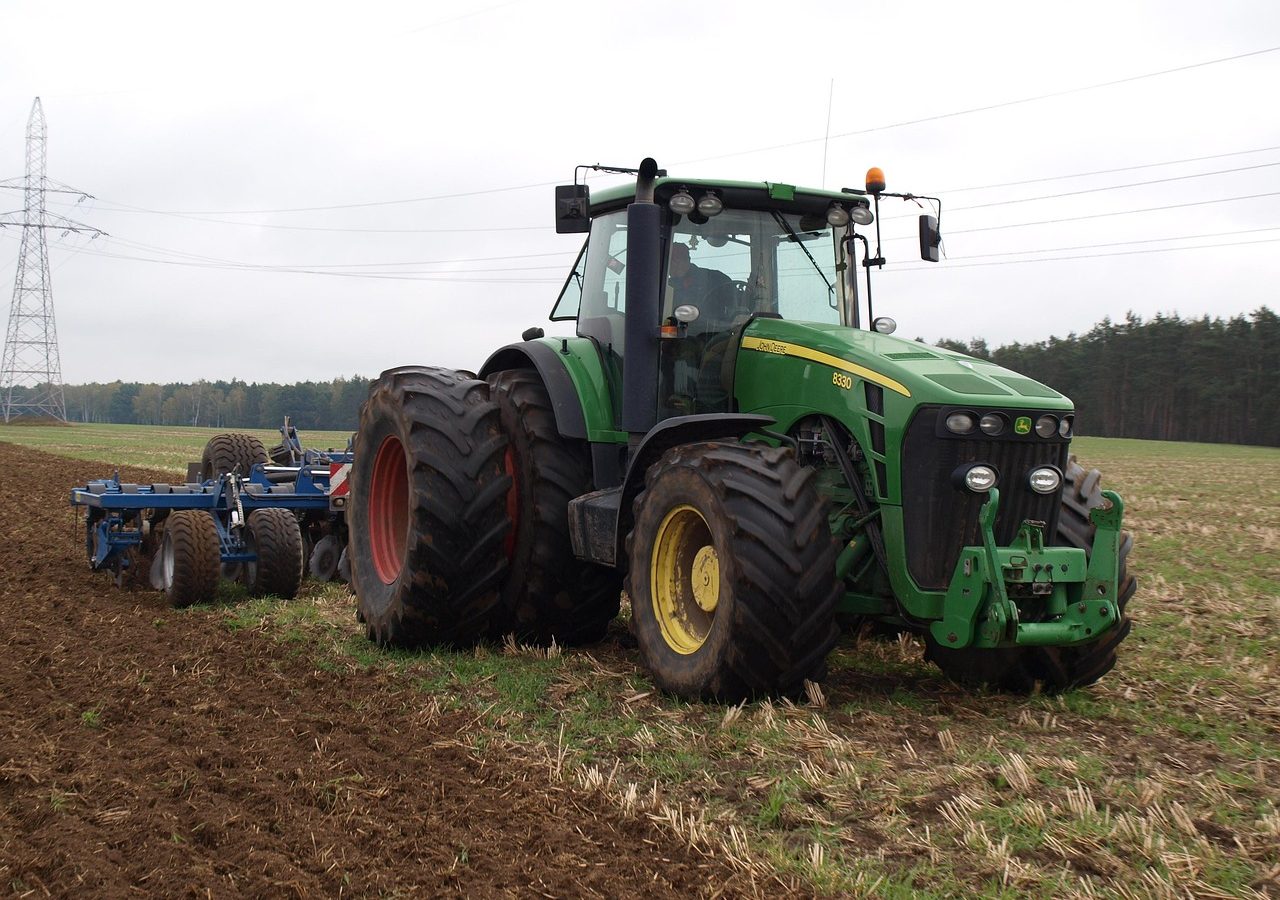
When you plant several fields or work more than three or four acres, a compact tractor stops being a luxury and starts being a time-saver. Tractors bring weight, hydraulics, and a power take-off, which unlocks tillage and mowing that ATV gear simply cannot match. But this tier is easy to over-buy, so buy for your acreage, not your ego.
What a tractor really adds
The three-point hitch is the magic. It lets you mount a box blade, a heavy disc, a tiller, a seed drill, and a rotary cutter, and it holds them at a set depth. A rear-mounted disc bites far deeper than any ATV disc, so hard or clay-heavy ground turns into a fine seedbed in fewer passes. A PTO-driven tiller can make a perfect seedbed in one trip, though it can be hard on soil structure if overused.
A no-till seed drill is the dream tool for many. It slices a slot, drops seed at the right depth, and presses it closed in one pass, all without tearing up the whole field. That means less erosion, better moisture, and cleaner stands. Drills are pricey, but on large acreage they pay for themselves in seed savings and results.
Be realistic about cost and storage. A used 25 to 35 hp compact tractor plus implements can run well past the price of a truck. If you plant one small plot a year, that money is better spent on lime, seed, and good food plot fertilizer. Rent or borrow tractor time before you commit to owning. Many landowners share equipment or hire a neighbor for the heavy tillage day, then handle everything else with ATV and hand tools.
Sprayers: Beat the Weeds Before You Plant
If you buy only one power-multiplying tool, make it a sprayer. Weed control is the difference between a lush plot and a patch of grass with a few sad clover leaves. A good herbicide program, applied with the right sprayer, sets up everything that follows. 💧
Choosing your sprayer type
A backpack sprayer is the entry point and honestly all many hunters ever need. Four gallons rides on your back and reaches spots no machine can. Step up to a tow-behind spot sprayer with a boom for larger fields, or a UTV-mounted tank for real acreage. Always match tip size and pressure to your herbicide label, and always wear gloves and eye protection. ⚠️
| Sprayer Type | Best Plot Size | Rough Cost | Why Choose It |
|---|---|---|---|
| Handheld pump | Spot spraying | $15 to $40 | Cheap, precise touch-ups |
| Backpack sprayer | Under 1 acre | $60 to $150 | Reaches anywhere on foot |
| Tow-behind boom | 1 to 5 acres | $150 to $450 | Fast, even coverage |
| UTV or 3-point boom | 5+ acres | $400 to $1,200 | Big tanks, wide booms |
Whatever you choose, calibrate it. Spray water on a measured area, time how long a tank lasts, and adjust your walking speed so you apply the labeled rate. Under-spraying wastes product and leaves weeds alive. Over-spraying can harm your plot and the soil. Rinse your sprayer well after every use, especially if you switch chemicals, because leftover residue can kill the next crop you spray near. A clean, calibrated sprayer is worth more than the most expensive disc in the barn.
Spreaders: Get Seed and Fertilizer Down Evenly
Even seeding is quiet, unglamorous, and hugely important. Clumpy, uneven spreading gives you thick patches and bare gaps, which weeds happily fill. A good spreader lays seed and fertilizer at a steady rate so your whole plot comes up as one even carpet. 🌱
Broadcast, drop, and tow-behind
A handheld crank spreader is the cheapest option and perfect for small plots and touch-ups. A push broadcast spreader covers ground faster and gives a more even pattern on open, level fields. For ATV and tractor work, a tow-behind or three-point broadcast spreader holds fifty pounds or more and throws a wide swath, so you cover acres quickly.
Set the rate correctly. Most spreaders have a numbered gate, and the seed bag lists a setting. Start on the low side, spread in two directions in a crosshatch pattern, and you will get far more even coverage than a single fast pass. Small seeds like clover and brassica flow fast, so a low gate setting keeps you from dumping the whole bag in one corner. Mix tiny seed with a carrier such as pelletized lime or cracked corn to slow the flow and spread it more evenly.
Fertilizer and lime go through the same spreader, though pelletized lime is far easier to handle than bagged ag lime. Spreading nutrients evenly matters just as much as spreading seed, since a striped fertilizer job gives you striped growth. When in doubt, split your material in half and make two lighter passes. It takes a few extra minutes and pays off with a uniform, weed-resistant stand. Pair even spreading with a solid seedbed from good food plot preparation and your germination rates will climb.
A quality backpack sprayer is the highest-value tool a food plotter can own. It handles weed control, spot spraying, and even foliar feeding, and it goes anywhere your boots go. Look for a padded harness, an adjustable brass tip, and a wide-mouth tank that is easy to fill and clean.
- ✅ Reaches hidden woods plots no machine can access
- ✅ Precise weed control before and after planting
- ✅ Easy to rinse so residue does not harm the next crop
- ✅ Doubles as a liquid fertilizer applicator
Our pick on Amazon: FIELD KING 190328 Backpack Sprayer, 4 GallonThe specs above describe what to look for. Check the listing for this model’s exact specifications and current price.
Price and availability on Amazon.com. This site may earn a commission.
Soil Prep Tools: Discs, Harrows, and Cultipackers
Soil preparation is where plots are won or lost. Seed needs firm, weed-free ground and tight contact with soil to sprout. The three tools that get you there are the disc, the harrow, and the cultipacker, and understanding each one helps you buy only what your ground truly needs.
How the three work together
The disc cuts and turns the top few inches, burying old growth and loosening the surface. The harrow, whether a spike-tooth drag or a chain-link mat, smooths the rough surface a disc leaves behind and levels out clods. The cultipacker is the finishing tool. Its ridged rollers press the seedbed firm and push seed into contact, which is the secret behind those thick, even plots you envy.
You do not always need all three. Many low-disturbance plotters skip the disc entirely, spraying to kill weeds, then broadcasting into the dead thatch and rolling it in. This throw-and-mow or spray-and-throw method protects soil, holds moisture, and works beautifully for clover, brassicas, and cereal grains. It also saves you the cost of tillage gear.
If you do till, do not overdo it. Working soil too finely destroys structure, invites erosion, and wakes up a fresh crop of weed seeds from below. A rougher seedbed with some clods actually holds moisture better and resists washing. Match your tillage to your seed: tiny seeds want a firmer, finer bed, while larger seeds like peas and cereal grains tolerate a rougher surface. When you time it all with the season, your effort compounds, so plan around proven windows for winter food plots and other seasonal blends.
Equipment Comparison by Budget
Here is the whole picture in one place. This table compares the three main tiers so you can see, at a glance, what each level buys you and where it fits. Use it to decide where your money goes first.
| Tier | Typical Cost | Best Plot Size | Strengths | Limits |
|---|---|---|---|---|
| Hand tools | $100 to $250 | Under 0.5 acre | Quiet, reaches anywhere, never breaks down | Slow, tough on your back |
| ATV / UTV | $800 to $3,500 | 0.5 to 4 acres | Versatile, hauls gear, reaches hidden plots | Light weight limits deep tillage |
| Compact tractor | $12,000+ | 3+ acres | Power, depth, drills and PTO tools | Costly, hard to haul into woods |
Notice how the ATV tier covers the widest range of real hunting plots. That is why most experienced plotters build around an ATV first and only add a tractor when acreage truly demands it. Also notice that hand tools never disappear from the kit. Even tractor owners keep a rake, a backpack sprayer, and a hand spreader for touch-ups, edges, and those tucked-away spots the big machine cannot reach.
The smartest approach is to buy in the order the jobs happen: sprayer first for weed control, then a spreader, then soil-working tools, then a cultipacker or roller to finish. Build the kit one paycheck at a time and you will never overspend on a tool you were not ready to use.
What It Really Costs to Get Started
Sticker shock keeps a lot of hunters from ever planting. It should not. Below is an honest, no-nonsense look at what a functional starter kit costs at each level, including the consumables people forget to budget for. 💡
| Item | Budget Kit | Mid Kit | Premium Kit |
|---|---|---|---|
| Weed control | Backpack sprayer $80 | Tow boom sprayer $250 | UTV boom sprayer $900 |
| Spreading | Hand crank $30 | Tow broadcast $180 | 3-point spreader $500 |
| Soil work | Rake and hoe $60 | ATV disc $700 | Tractor disc $1,800 |
| Seed contact | Hand tamper $25 | ATV cultipacker $450 | Tractor cultipacker $1,600 |
| Rough total | Around $195 | Around $1,580 | Around $4,800 |
Do not forget the yearly consumables, because they matter as much as the machines. Budget for lime, fertilizer, herbicide, and quality seed every single season. On many plots, these inputs cost more over five years than the equipment does, and they are what actually feed the deer. Skimping on lime to afford a fancier disc is a classic backwards move.
The takeaway is freeing: a $195 budget kit really will grow a great half-acre plot. Start there, learn your ground, and upgrade only when a specific job frustrates you. Let the work tell you what to buy next, rather than buying everything up front and hoping you use it.
Common Mistakes That Waste Money
Most equipment regret comes from a handful of avoidable errors. Learn these now and keep your cash where it belongs, in the ground growing forage.
- Mistake: Buying a tractor for one small plot. Fix: Rent or borrow tillage time and run everything else with an ATV and hand tools until acreage truly justifies ownership.
- Mistake: Skipping the sprayer to afford a disc. Fix: Buy weed control first, since killing competition matters more than turning dirt on most plots.
- Mistake: Tilling soil too fine and too often. Fix: Leave some clods, make fewer passes, and protect soil structure and moisture.
- Mistake: Spreading seed in one fast pass. Fix: Cut the rate, spread in a crosshatch, and mix tiny seed with a carrier for even coverage.
- Mistake: Never pressing the seed. Fix: Cultipack, roll, or drag to get firm seed-to-soil contact, which drives germination.
- Mistake: Ignoring soil test results. Fix: Test first, lime and fertilize to the numbers, and let no machine substitute for correct pH.
- Mistake: Storing gear wet and dirty. Fix: Rinse sprayers, grease discs, and store under cover so tools last a decade instead of a season. ⚠️
Pro Tips and a Key Insight
These are the small habits that separate hunters who grow lush plots from those who fight bare dirt every year. None of them cost much. All of them work.
- ✅ Time your work to the weather. Broadcast small seed right before a soft, steady rain for the best germination.
- ✅ Keep a maintenance kit on the ATV: a wrench, spare pins, grease, and zip ties save a wasted trip.
- ✅ Calibrate every sprayer and spreader before you trust it. Guessing rates wastes money and product.
- ✅ Buy used, sturdy implements over cheap new ones. A solid steel disc outlasts three flimsy stamped ones.
- ✅ Match tillage depth to seed size, and always finish with firm seed-to-soil contact.
- ✅ Clean and grease everything before storage so it is ready the day the window opens.
Equipment is a multiplier, not a miracle. The hunter who tests soil, controls weeds, and presses seed with cheap tools will beat the one who owns a tractor but skips the fundamentals every single time.
Remember that the goal is not to own the most gear. It is to grow the most forage per dollar and per hour. Every tool you buy should earn its place by making one of the four core jobs easier, faster, or better. If it does not, leave it on the shelf and put that money into lime, seed, and time on the land.
Food Plot Equipment FAQ
Can I plant a food plot without any machinery?
Yes. Thousands of great plots are built each year with just a backpack sprayer, a hand spreader, and a rake. The spray-and-throw method, where you kill weeds, broadcast seed onto the dead thatch, and let rain do the rest, works especially well for clover, brassicas, and cereal grains on small woodland plots.
What is the single most important tool to buy first?
A sprayer. Weed control is the foundation of every successful plot. Killing competition before you plant does more for your results than any tillage tool, and a four-gallon backpack sprayer costs less than a hundred dollars.
Do I really need a cultipacker?
Not always, but it helps a lot with small-seeded crops like clover and brassica that must sit near the surface. If you cannot afford one, drag a weighted section of chain-link fence or a heavy board to press seed into firm contact instead.
Is an ATV disc strong enough for hard ground?
It can be if you add weight. Most ATV discs are light, so bolt on a weight tray or stack cinder blocks and make several passes. On very hard or rocky ground, spray-and-throw with minimal tillage is often the smarter route.
How much should a beginner spend on equipment?
Around $200 is plenty to plant an excellent half-acre plot. Put a backpack sprayer, a hand spreader, and basic hand tools together, then reinvest your savings into lime, fertilizer, and quality seed, which are what truly feed the deer.
Should I buy new or used implements?
Used, sturdy implements are usually the better buy. A solid old steel disc or cultipacker will outlast several cheap new stamped-steel versions. Inspect for bent frames and worn bearings, grease everything, and you will get years of reliable service.
- ✅ Test your soil before buying any equipment
- ✅ Start with a backpack sprayer for weed control
- ✅ Add a spreader sized to your plot
- ✅ Choose soil-working tools that match your access and acreage
- ✅ Finish with a cultipacker, roller, or drag for firm seed contact
- ✅ Budget yearly for lime, fertilizer, herbicide, and seed
- ✅ Clean, grease, and store gear under cover after every use
- ✅ Upgrade only when a specific job frustrates you
You do not need a barn full of machines to grow plots that pull deer past your stand. Start small, buy in the order the jobs happen, and let your land teach you what to add next. Match your gear to your plot instead of the hype, keep the fundamentals sharp, and every season your plots and your dollars will work harder for you. Now grab your sprayer and go build something the deer cannot resist. 🦌🌱