Fall Food Plots for Deer: Best Cool-Season Crops to Plant (2026)
A practical guide to fall food plots for deer, covering the best cool-season crops, exact planting windows, soil prep, and how to hunt over your plot for more deer sightings this season.
As an Amazon Associate, Deer Hunting Success may earn from qualifying purchases.
Fall Food Plots for Deer: Best Cool-Season Crops to Plant (2026)
Plant the right cool-season crops at the right time, prep your soil the smart way, and build a plot that pulls deer past your stand all season long.
🌱 Cool-Season Crops
📅 Planting Dates
🧪 Soil Prep
🦌 Hunt Setup
Fall food plots are the single best way to hold deer on your land and put them in front of your stand when season opens. When the woods go quiet and natural food starts to fade, a lush green plot of cool-season crops becomes a magnet. Deer shift their whole daily pattern around a good plot, and that gives you steady, predictable sightings. 🦌
The good news is that a great fall plot is
Why Fall Food Plots Work So Well
By late summer, natural deer food is running out. Green browse dries up, acorns get eaten fast, and farm crops get harvested. Right when deer need energy the most, the buffet closes. A fall food plot fills that gap with fresh, high-energy greens that deer cannot find anywhere else.
Cool-season crops love the cold. As nights get frosty, plants like turnips and rape turn their starches into sugar. That frost-sweetened taste is like candy to a whitetail, and it pulls deer in from surrounding cover. The colder it gets, the harder they hit a good brassica plot.
There is a second big reason plots work: pattern. Deer are creatures of habit. When a reliable food source shows up, they build their daily travel around it. That means you can predict where a deer will be at dawn and dusk, which is exactly what you need for a clean shot.
Fall plots also help your herd. Does going into winter with more body fat raise healthier fawns, and bucks recover faster after the rut. A plot is not just a hunting tool, it is a year-round investment in better deer. If you want a plot that keeps feeding deer past the season, pair it with a winter food plot plan that carries them through the cold months.
Best Cool-Season Crops for Deer
Not all fall crops are equal. Some green up fast for early season, some peak after hard frost, and some come back year after year. The best plots often mix two or three so deer always have something to eat. Here is a quick side-by-side to help you choose.
| Crop | Type | Peak Draw | Best For |
|---|---|---|---|
| Cereal Rye | Grain | Early to late | Easy, cheap, cold-hardy |
| Oats | Grain | Early season | Fast, sweet, quick draw |
| Purple-Top Turnip | Brassica | After frost | Late-season energy |
| Forage Radish | Brassica | Mid to late | Loosens soil, quick growth |
| Winter Peas | Legume | Early to mid | High protein, tasty |
| Crimson Clover | Legume | Fall and spring | Protein, builds soil |
If you can only plant one thing, cereal rye is the safest bet. It sprouts in almost any soil, handles drought and cold, and deer eat it from September through March. For the best of both worlds, blend rye with a brassica like turnips and a little clover. That gives you an early draw, a late-season draw, and spring regrowth from a single planting. Want a deeper look at seed choices? See our guide to choosing the right seeds for food plots.
A ready-to-go blend takes the guesswork out of your first plot. Look for a mix that pairs cold-hardy grains with brassicas and clover so you get an early draw, a late draw, and spring regrowth from one bag.
- ✅ One bag covers early and late season
- ✅ Forgiving mix that grows in most soils
- ✅ Attracts deer from bow season into winter
- ✅ No tractor needed to plant
Our pick on Amazon: Hale Habitat & Seed Brassica Blend Food Plot MixThe specs above describe what to look for. Check the listing for this model’s exact specifications and current price.
Price and availability on Amazon.com. This site may earn a commission.
Brassicas: Turnips, Radishes, and Rape
Brassicas are the stars of late-season plots. This family includes turnips, forage radishes, rape, kale, and canola. They grow big, leafy tops and, in the case of turnips and radishes, a fat root that deer dig up once the tops are gone.
Why deer love them late
Brassicas taste bitter when young, so deer often ignore them until the first few hard frosts. Frost converts the plant starches to sugar, and almost overnight the plot gets hammered. That timing is perfect, because those cold late-season days are often the best hunting of the year. A brassica plot can be your ace for the November and December hunt.
How to grow them
Brassicas need a firm, weed-free seedbed and decent soil. Plant them 60 to 90 days before your first frost so they have time to bulk up. Seed shallow, about a quarter inch deep, because the seeds are tiny. They are heavy feeders and love nitrogen, so do not skimp on fertilizer.
One warning: ⚠️ do not plant brassicas in the same spot every single year. They can build up soil diseases and pests. Rotate them with grains or clover every other year to keep the plot healthy. Radishes are great for breaking up hard soil with their deep roots, which sets up an easier planting next spring.
Cereal Grains: Rye, Oats, and Wheat
Cereal grains are the workhorses of fall plots. We are talking about cereal rye, which is not the same as ryegrass, plus oats, wheat, and triticale. They are cheap, forgiving, and grow almost anywhere, which makes them perfect for beginners.
Cereal rye is king
Cereal rye is the toughest, most reliable food plot crop you can plant. It germinates in cool soil, shrugs off drought, and keeps growing after frosts that kill other crops. Deer graze it all fall and winter, and it greens back up in spring. If you have poor soil or a late start, plant rye.
Oats and wheat
Oats are the candy of the grain world. Deer often pick oats over everything else early in the season because they are sweet and tender. The catch is that oats are not cold-hardy and usually die off after a hard freeze. Wheat sits in the middle: hardier than oats, a bit less loved than rye, and a solid all-around choice.
Grains are easy to broadcast and only need to be lightly covered. They also make a great nurse crop, meaning you can mix them with clover. The grain grows fast and protects the slower clover, then dies back to let the clover take over the next year. For step-by-step help, see our guide on planting food plots for deer.
Clover and Winter Peas for Protein
Grains and brassicas bring the carbs, but legumes bring the protein. Clover, winter peas, and vetch pull nitrogen from the air and put it into the soil, so they feed both your deer and your dirt. That makes them a smart part of any fall mix.
Winter peas
Austrian winter peas are a deer favorite. They are high in protein and very tasty, so they can get browsed hard and fast in a small plot. Plant them with a grain like rye or oats so the vines have something to climb and the plot is not wiped out in a week.
Clover
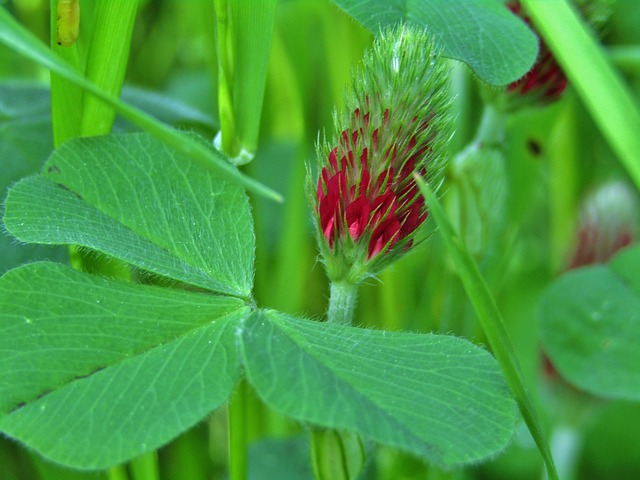
Crimson clover is an annual that germinates fast in fall, feeds deer through late fall, then explodes with growth in spring. White clover, like ladino, is a perennial that can last three to five years if you mow and manage it, giving you a plot that keeps giving. Clover is a top choice for a long-term plot that pulls double duty.
Legumes do best when the soil pH is close to neutral, around 6.5 to 7.0. They also benefit from inoculant, a cheap powder that helps them fix nitrogen. If your soil is acidic, lime is a must. Learn more about reading your dirt in our food plot soil analysis guide.
When to Plant Fall Food Plots by Region
Timing is the number one thing people get wrong. Plant too early and summer heat or weeds can choke your plot. Plant too late and crops never mature before winter. The rule of thumb: plant 45 to 90 days before your average first frost, depending on the crop.
| Region | Best Planting Window | Avg First Frost |
|---|---|---|
| Northern (MN, WI, MI) | Aug 1 to Sep 5 | Late Sept to Oct |
| Midwest (IA, IL, IN, OH) | Aug 15 to Sep 15 | Mid to late Oct |
| Mid-Atlantic (PA, VA, KY) | Aug 20 to Sep 25 | Late Oct |
| Southeast (GA, AL, SC) | Sep 1 to Oct 15 | Nov or later |
| Deep South (FL, Gulf TX) | Sep 15 to Nov 1 | Late Nov to Dec |
Brassicas need the most lead time, so plant them at the early end of your window. Grains and clover are more flexible and can go in later. A great trick is to plant to a rain: watch the forecast and get seed in the ground right before a soaking rain. Tiny seeds need moisture to germinate, and a well-timed rain can make or break your plot.
If you missed your ideal window, do not give up. Cereal rye can be planted surprisingly late and still provide green forage. It is the ultimate safety net for a procrastinating hunter. ✅
Soil Prep and Soil Testing Made Simple
Here is the truth most seed bags will not tell you: soil pH matters more than the seed you pick. If your soil is too acidic, crops cannot use the fertilizer you apply, no matter how much you dump on. A cheap soil test is the highest-value thing you can do for your plot.
Test first
Grab a soil test kit or mail a sample to your local ag extension office. It costs only a few dollars and tells you your pH and what nutrients you lack. Most food plot crops want a pH between 6.0 and 7.0. Below that, add lime. The test takes the guesswork out and saves you money on wasted fertilizer.
Prep the seedbed
Good seed-to-soil contact is everything. You have a few options depending on your gear:
- Full till: disc or plow the plot, then rake it smooth. Best for a clean, firm seedbed.
- Spray and broadcast: kill weeds with herbicide, then broadcast seed and lightly drag. Less work, no tractor needed.
- Throw and mow: broadcast seed into standing growth, then mow over it. Cheapest, and it works well for small plots.
Whatever method you use, the goal is the same: press small seeds into firm soil so they sprout evenly. For a full walkthrough, see our guide on preparing food plots before you plant.
Seeding Rates and How to Plant
Once your seedbed is ready, planting is the easy part. The most common mistake is seeding too heavy, which crowds plants and stunts them. More seed does not mean more food. Follow these per-acre rates and cut them down for small plots.
| Crop | Rate per Acre | Seed Depth | Notes |
|---|---|---|---|
| Cereal Rye | 80 to 120 lbs | 0.5 to 1 in | Very forgiving |
| Oats | 80 to 100 lbs | 0.5 to 1 in | Plant thick |
| Turnips | 4 to 5 lbs | 0.25 in | Do not overseed |
| Radishes | 5 to 8 lbs | 0.25 in | Space them out |
| Winter Peas | 40 to 60 lbs | 1 to 1.5 in | Mix with grain |
| Crimson Clover | 15 to 20 lbs | 0.25 in | Needs firm bed |
To plant, use a hand or chest broadcast spreader for small plots or a tow-behind spreader for big fields. Broadcast half your seed walking north to south, then the other half east to west for even coverage. After seeding, cover tiny seeds by dragging a chain-link fence or a section of chain harrow. Bigger seeds like peas need to go deeper, so a light disc pass helps.
💡 Pro tip: only mix tiny brassica seed with your grain in the spreader if you set the gate very small, or make separate passes. Otherwise the heavier grain flows out first and your brassicas end up piled in one corner.
You do not need a tractor to plant a great plot. A simple hand-crank or chest spreader lets you broadcast seed and pelletized lime evenly across small plots, and it stores in a corner of the garage.
- ✅ Even coverage for small seed like brassicas
- ✅ Cheap and easy for any hunter
- ✅ Great for cross-hatch two-direction seeding
- ✅ Doubles for lime and fertilizer spreading
Our pick on Amazon: EarthWay 2750 Bag Seeder SpreaderThe specs above describe what to look for. Check the listing for this model’s exact specifications and current price.
Price and availability on Amazon.com. This site may earn a commission.
Lime and Fertilizer for Fall Plots
Your soil test tells you exactly what to add, but here are the basics. Lime raises pH and unlocks nutrients. It works slowly, so apply it as early as possible, ideally a few months before planting. Pelletized lime is easy to spread with a broadcast spreader if you cannot get a lime truck to your plot.
Reading fertilizer numbers
Fertilizer bags show three numbers, like 19-19-19. These are nitrogen, phosphorus, and potassium. Nitrogen fuels leafy green growth, which brassicas and grains crave. A common plan is to apply a balanced fertilizer at planting, then top-dress brassicas and grains with extra nitrogen four to six weeks later to push more growth.
Legumes like clover and peas make their own nitrogen, so they need less. For those, focus on phosphorus and potassium instead. Over-fertilizing a clover plot just feeds the weeds and wastes money.
If you are on a budget, prioritize in this order: lime first, then nitrogen for grains and brassicas, then everything else. Getting pH right doubles the value of every other input. Do not pour money into seed and fertilizer while ignoring a pH of 5.0, or you will be disappointed. For product picks and rates, see our food plot fertilizer guide.
How to Hunt Over Your Fall Food Plot
Growing the plot is half the job. Hunting it without spooking deer is the other half. The biggest killer of good plots is overhunting and bad wind. Deer learn fast, and a mature buck will go nocturnal after one or two bad encounters.
The best food plot in the county is worthless if the deer only feed on it at 2 a.m. Protect your access and your wind, and let the plot do the work.
Set your stand or blind on the downwind edge, and plan an entry and exit route that keeps your scent away from bedding areas. Never walk across the plot to your stand. Hunt the edges and staging areas early in the year, and save the plot interior for the late season when deer feed in daylight.
Here are field-tested tips to hunt your plot smart:
- ✅ Hunt only on a good wind, even if it means skipping a day.
- ✅ Use terrain and a screen of standing corn or tall grass to hide your entry.
- ✅ Watch the plot from afar with binoculars before you ever hunt it.
- ✅ Hunt the plot hardest during the late season and on cold fronts.
- ✅ Keep your scent low with clean clothes and the right cover scents.
Wind direction also decides which days to sit. If it is howling, read our take on how much wind is too much for deer hunting before you climb in.
Common Fall Food Plot Mistakes (and Fixes)
Most failed plots come down to a handful of avoidable errors. Learn from these and you will be ahead of most hunters on your very first try.
- Mistake: Skipping the soil test and guessing at lime and fertilizer. Fix: Spend a few dollars on a test first. It is the cheapest way to double your plot yield.
- Mistake: Planting too early into summer heat and weeds. Fix: Wait for your window and plant just before a rain for fast, even germination.
- Mistake: Seeding way too heavy. Fix: Follow the rate chart. Crowded plants stay small and starve each other.
- Mistake: Burying tiny brassica or clover seed too deep. Fix: Barely cover it, about a quarter inch, then press for good contact.
- Mistake: Overhunting the plot and blowing deer out. Fix: Hunt only on the right wind and save the plot for prime days.
- Mistake: Planting one crop and hoping it lasts all season. Fix: Blend an early crop, a late crop, and a legume so there is always something to eat.
⚠️ One more: do not ignore your plot after planting. A quick fall mowing of tall clover or a spot spray of weeds keeps the plot productive and attractive right through the season.
Fall Food Plot Costs and Quick Facts
Fall plots are one of the cheapest ways to improve your hunting. Here is a rough budget for a one-acre plot so you know what to expect. Costs vary by region and by how much your soil needs.
| Item | Typical Cost per Acre | Notes |
|---|---|---|
| Soil test | 8 to 20 dollars | Do this first, every time |
| Seed blend | 30 to 80 dollars | Grains cheap, brassica mixes pricier |
| Lime, pelletized | 40 to 120 dollars | Skip if pH is already good |
| Fertilizer | 40 to 90 dollars | Based on your soil test |
| Total, typical | 120 to 300 dollars | Less if soil is healthy |
You can trim costs sharply by buying bulk cereal rye from a farm co-op instead of branded bags, and by only liming when the test calls for it. A small quarter-acre plot can be done for well under one hundred dollars and still pull plenty of deer. Renting or borrowing tools also saves money. See our food plot equipment guide for gear that fits a small budget.
Fall Food Plot FAQ
What is the easiest fall food plot to grow?
Cereal rye, hands down. It sprouts in poor soil, handles cold and drought, and deer eat it all season. Broadcast it, lightly cover it, and you will have green forage with almost no fuss. It is the perfect first plot for a beginner.
How late can I plant a fall food plot?
It depends on your region, but cereal rye and winter wheat can go in surprisingly late, often within a few weeks of your first frost. Brassicas need the most lead time, so if you are running late, skip them and plant grains instead.
Do I really need a tractor?
No. Plenty of great plots are grown with just a backpack sprayer, a hand spreader, and a rake or a mower. The throw-and-mow method lets you plant small plots with no heavy equipment at all. Good soil prep matters far more than fancy gear.
What is the best fall food plot for late season?
Brassicas like purple-top turnips and forage radishes shine after hard frost, when they sweeten up and deer dig for the roots. Pair them with standing cereal grains and you will have a plot that peaks during the cold December hunt.
How big should my food plot be?
Even a quarter-acre plot can be effective for hunting. Small hidden plots near cover often draw daylight movement better than huge open fields. If deer numbers are high, go bigger or plant hardy grains so the plot is not eaten to dirt too fast.
Should I mix crops or plant just one?
Mixing is almost always better. A blend of a grain, a brassica, and a legume gives you an early draw, a late draw, and spring regrowth from one planting. It also spreads your risk if one crop struggles that year.
- ✅ Pull a soil test and correct pH with lime early
- ✅ Pick a blend: a grain, a brassica, and a legume
- ✅ Prep a firm, weed-free seedbed
- ✅ Plant 45 to 90 days before your first frost
- ✅ Seed at the right rate and depth, then press for contact
- ✅ Plant just before a soaking rain
- ✅ Fertilize based on your soil test results
- ✅ Set stands downwind with a clean entry route
- ✅ Hunt only on good wind and save the plot for prime days
A great fall food plot is well within your reach, even on a small budget and with simple tools. Start with a soil test, pick a smart blend, plant on time, and protect your wind. Do those four things and you will be watching deer feed in front of your stand while everyone else wonders where the deer went. Get your seed in the ground this season, and enjoy the reward. 🦌🌱